
Planning an office buildout in 2025? You're looking at one of the smartest investments your business can make: but only if you do it right. With commercial real estate costs climbing and workplace expectations evolving faster than ever, every square foot and every dollar needs to work harder for your bottom line.
Whether you're expanding in Denver's booming tech corridor or setting up shop in Southern California's competitive market, the key to maximizing your ROI lies in strategic planning, smart design choices, and understanding what today's workforce actually needs. Let's dive into everything you need to know to turn your office buildout into a profit-generating powerhouse.
Why Office Buildouts Are More Critical Than Ever
The office landscape has fundamentally shifted. With 64.4% of large U.S. companies now embracing hybrid work models, your office isn't just a place where people show up: it's a strategic tool that needs to attract talent, boost productivity, and justify every dollar spent.
Here's the reality: your new office space is competing with employees' home offices. That means every design decision, from lighting to layout, needs to offer something better than what they get at their kitchen table.
Starting With Smart Financial Planning
Understanding True Buildout Costs
Before you fall in love with any design ideas, let's talk numbers. Office buildout costs typically range from $202 to $574 per square foot, depending on your market and specifications. In high-cost areas like Southern California, expect to hit the upper end of that range, while Denver offers more moderate pricing in the $250-400 range for quality buildouts.
Here's what goes into those numbers:
- Construction and electrical work: 40-50% of budget
- Furniture and fixtures: 25-35% of budget
- Technology infrastructure: 15-20% of budget
- Permits and professional fees: 10-15% of budget
Regional Market Considerations
Denver Market Advantages:
- Lower overall construction costs compared to coastal markets
- Growing tech talent pool driving demand for modern office spaces
- Favorable permitting processes in most Denver suburbs
- Strong ROI potential with the city's 15% population growth projection through 2030
Southern California Realities:
- Premium costs but access to top-tier talent pools
- Stricter environmental and seismic building codes
- Higher potential rental income if subleasing space
- Established business networks and client accessibility
Calculating Your Space Needs Like a Pro
Don't guess at square footage: calculate it strategically. Start with 100-150 square feet per employee, then add 20-30% for common areas, meeting spaces, and future growth. But here's where it gets interesting: in 2025, you're not just planning for full-time occupancy.
Smart businesses are designing for "peak utilization": planning for your busiest days rather than average days. If you have 50 employees but only 35 are in the office on typical days, design for 40-45 workstations with flexible common areas that can accommodate overflow.
Design Strategies That Maximize ROI
Flexibility is Your Best Investment
The highest-ROI office investments in 2025 are modular and adaptable. Instead of building fixed walls, invest in moveable partitions and modular furniture systems. This flexibility allows you to reconfigure spaces as your team grows or your needs change, extending the useful life of your buildout by years.
Technology Infrastructure That Pays for Itself
Don't skimp on technology infrastructure: it's where you'll see immediate productivity gains. Invest in:
- Occupancy sensors that optimize heating, cooling, and lighting
- High-speed internet with redundant connections
- Wireless charging stations and abundant power outlets
- Video conferencing equipment that rivals home setups
These upgrades typically pay for themselves within 18-24 months through energy savings and productivity improvements.
Wellness Features With Measurable Returns
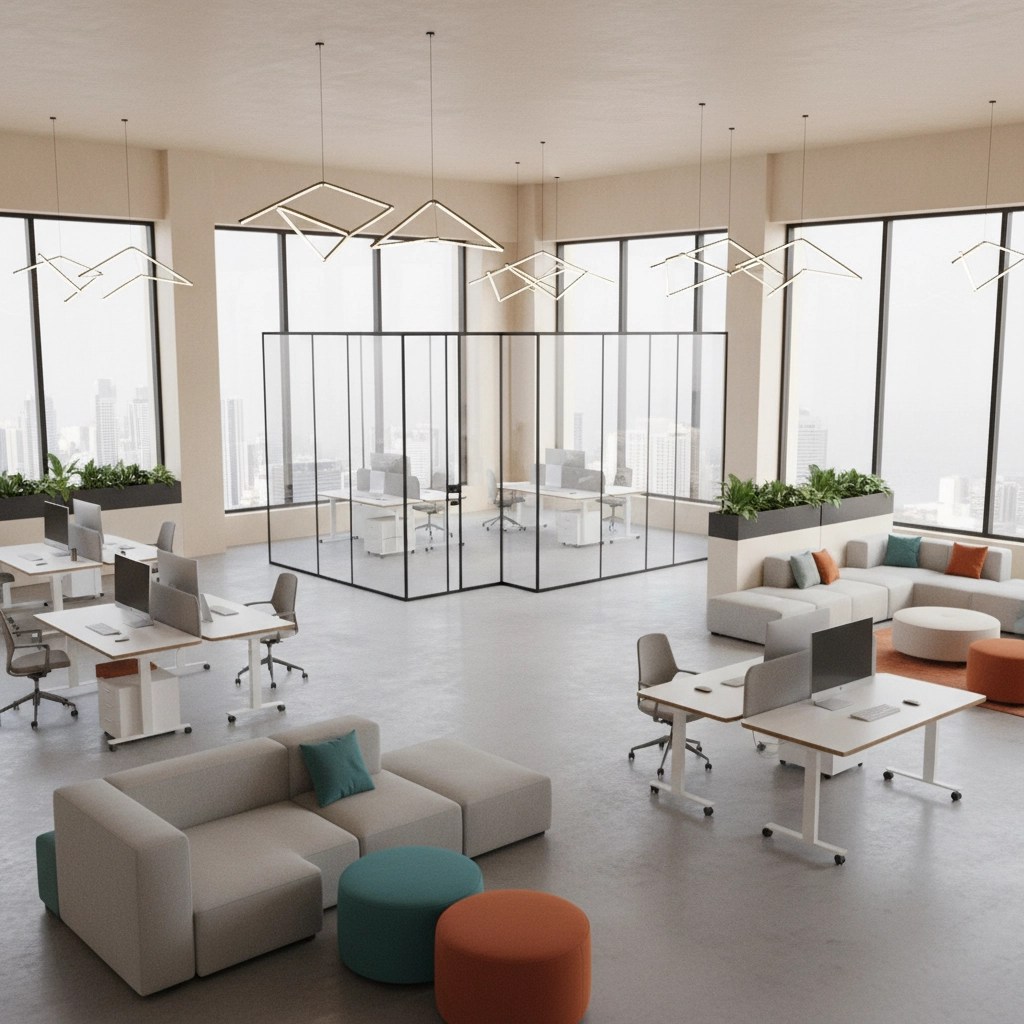
Biophilic design isn't just trendy: it's profitable. Studies show that offices with natural light, plants, and outdoor views reduce sick days by 15% and increase productivity by 10-15%. In practical terms, that's often enough to justify the entire buildout cost through reduced turnover and increased output.
The Construction Process: Maximizing Efficiency and Minimizing Disruption
Permitting Strategy for Faster Approvals
Getting permits can make or break your timeline. In Denver, commercial permits typically take 4-6 weeks if you submit complete plans. Southern California municipalities can take 8-12 weeks, so plan accordingly.
Pro tip: Work with a contractor experienced in your specific city's requirements. Local expertise can cut permitting time in half and prevent costly revisions.
Phased Construction for Continued Operations
If you're expanding or renovating existing space, consider phased construction. This approach costs 10-15% more upfront but can save tens of thousands in lost productivity and temporary space rental.
Maximizing Long-Term Value
Built-in Expansion Capabilities
Design your space with expansion in mind. Running conduit for future electrical needs or specifying modular HVAC systems costs little extra during initial construction but saves massive expenses later. Think of it as buying growth insurance.
Energy Efficiency as Profit Center
Energy-efficient buildouts qualify for various tax incentives and rebates. In California, the Self-Generation Incentive Program offers rebates for efficient lighting and HVAC systems. Denver offers property tax incentives for LEED-certified buildouts.
Beyond incentives, efficient systems typically reduce operating costs by 20-40%, money that flows directly to your bottom line every month.

Common ROI Killers to Avoid
Over-Designing Reception Areas
Many businesses blow their budget on impressive lobbies that clients see for five minutes. Instead, invest those dollars in employee workspace quality: it pays dividends in retention and productivity.
Ignoring Acoustics
Poor acoustics can kill productivity and make your beautiful open office unbearable. Budget 3-5% of your total buildout for proper acoustic treatment. Your team will thank you, and their output will reflect it.
Choosing Cheap Over Durable
That discount flooring might save you money upfront, but if you're replacing it in three years instead of ten, you've actually increased your total cost of ownership. Invest in commercial-grade materials for high-traffic areas.
Making It Happen: Your Next Steps
Ready to start your office buildout journey? Here's your action plan:
- Calculate your true space needs using the formulas we discussed
- Set a realistic budget including a 15-20% contingency fund
- Research local permitting requirements and timelines
- Interview contractors with commercial buildout experience in your market
- Plan for flexibility in both design and systems
The most successful office buildouts happen when business owners think like investors, not decorators. Every decision should contribute to employee productivity, operational efficiency, or long-term flexibility.
Your office buildout isn't just an expense: it's a strategic investment in your company's future. With the right planning, design, and execution, you'll create a space that not only serves your team today but continues delivering value for years to come.
Ready to explore how a professional buildout can transform your business? The investment you make today in smart office design will pay dividends in productivity, employee satisfaction, and business growth for years to come.