
Welcome! If you’re reading this, you’re likely dreaming of a fresh kitchen, a spa-like master bath, or perhaps a full-scale home addition. Planning home renovations is an exciting time, but if there is one thing that keeps homeowners up at night, it’s the budget. We’ve all heard the horror stories of projects costing double the initial estimate or taking twice as long as promised.
At Farris General Contracting, we believe your renovation experience should be rewarding, not stressful. It starts with a solid financial foundation. Whether you are looking for remodels or full custom builds, knowing where the common pitfalls lie can save you thousands of dollars and a lot of headaches.
Here are the seven most common mistakes homeowners make with their renovation budgets and, more importantly, how you can fix them before the first hammer swings.
1. Underestimating the True Cost of Quality
It is easy to scroll through social media and see a "budget" renovation that looks like a million bucks. However, the reality of quality craftsmanship construction involves more than just what you see on the surface. Many homeowners look at the price of materials: the tile, the flooring, the cabinets: and forget to account for everything else.
The Fix: When you are calculating your budget, don’t just look at the price tag of the "pretty" things. You need to factor in labor, permits, disposal fees, and specialized equipment. A good rule of thumb is to take your most realistic estimate and add a 10-20% contingency fund. This isn't just "extra money"; it’s your safety net for when a wall is opened up and we discover outdated wiring or a hidden leak. By expecting the unexpected, you stay in control of the project.
2. Setting a Budget Before Defining the Scope
This is the classic "cart before the horse" scenario. Often, homeowners decide they have exactly $50,000 to spend before they’ve actually decided what they want to do. If you set a hard cap without understanding the technical requirements of your vision, you are setting yourself up for disappointment.
The Fix: Start by defining your "Why." Are you looking for more space? Better flow? Updated aesthetics? Once you have a clear scope of work, talk to a professional residential contractor to get an idea of what that scope actually costs. At Farris General Contracting, our commitment to personalized service means we sit down with you to align your vision with a realistic price point before the project begins. You can check out some of our work to see how different scopes come to life.

3. Confusing "Must-Haves" with "Nice-to-Haves"
We all want the top-of-the-line appliances and the hand-painted Italian backsplash. However, if your budget is tight, prioritizing the wrong things can lead to cutting corners on the structural or functional elements of your home.
The Fix: Create two lists. Your "Must-Haves" should include items that affect the integrity, safety, and core functionality of the home: things like HVAC updates, quality windows, or durable flooring. Your "Nice-to-Haves" are the aesthetic flourishes that can be swapped for more affordable alternatives if the budget gets squeezed. Remember, it is much easier to upgrade a light fixture in three years than it is to redo faulty plumbing.
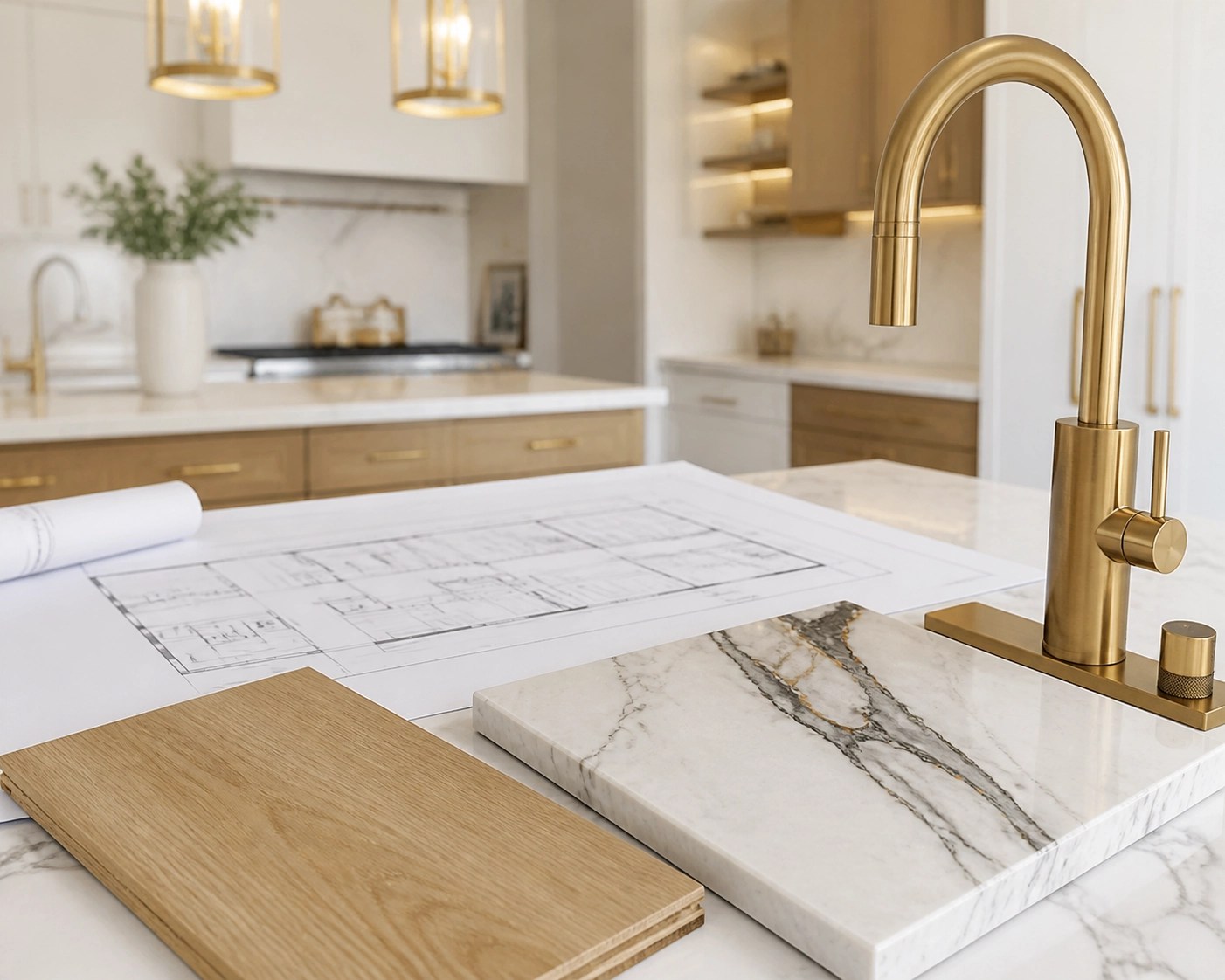
4. The "While You’re at It" Trap (Scope Creep)
It starts small. You’re doing a kitchen remodel, and you think, "While the crew is here, maybe we should just redo the powder room flooring, too." These small additions might seem convenient, but they are the fastest way to blow a budget. Every "small" change requires extra labor, more materials, and potentially more permits.
The Fix: Stick to the plan. Reliable project management relies on a locked-in scope. If you decide you truly want to add more to the project, ask your general contractor services provider for a formal change order. This document will show you exactly how the addition affects your timeline and your wallet, allowing you to make an informed decision rather than an emotional one.
5. Choosing a Contractor Based Solely on the Lowest Bid
It is tempting to go with the lowest number you see on paper. However, in the world of construction, a "low-ball" bid is often a red flag. It may mean the contractor is using inferior materials, hasn't included permit costs, or: worst of all: lacks the proper insurance and licensing.
The Fix: Look for value, not just the lowest price. A professional team like Farris General Contracting focuses on quality craftsmanship construction and long-term durability. When comparing bids, make sure you are comparing "apples to apples." Does the bid include debris removal? Is there a clear timeline? Check out our about us page to learn why experience and trust are worth more than a suspiciously low estimate.
6. Forgetting the "Soft Costs"
When you think of a renovation budget, you think of wood, nails, and labor. But what about the costs of living through a renovation? If you’re doing a full kitchen remodel, you might be eating out more often. If you’re doing a major addition, you might need to stay in a hotel for a week during the loudest or messiest phases.
The Fix: Include "lifestyle costs" in your renovation planning. Budget for takeout, a temporary storage unit for your furniture, or even a kennel for your pets if the noise will be too much for them. Being prepared for these secondary expenses prevents them from eating into your construction funds later on.

7. Over-Improving for the Neighborhood
While you want your home to be perfect for you, it is also an investment. If you spend $200,000 on a renovation in a neighborhood where the highest-selling home is only $400,000, you likely won't see a return on that investment when it comes time to sell.
The Fix: Research the local market. If your goal is to stay in the home for 20 years, your personal enjoyment is the priority. But if you plan to move in five years, talk to your contractor about which upgrades provide the best ROI. For example, adding square footage is often a safer bet for ROI than installing a gold-plated faucet. You can read more about maximizing ROI in our guide to house additions 101.
Working with a Partner You Can Trust
Budgeting doesn't have to be a math-induced migraine. The key to a successful project is transparency and communication. At Farris General Contracting, we pride ourselves on our reliable project management. We don't just give you a number; we give you a roadmap.
Our team is dedicated to providing personalized service to homeowners in our community, ensuring that every nail driven and every dollar spent contributes to a home you love. From initial consultation to the final walkthrough, we’re with you every step of the way.
Ready to start planning your next project with a team that values your budget as much as you do? We’d love to hear from you.
- Explore our previous projects: Our Work
- Learn more about our team: About Farris GC
- Ready for a quote? Contact Us Today
Don’t forget to check out our blog for more tips on interior design trends and home improvement advice! We can't wait to help you build something great.