
Welcome back! If you’ve been following our series, "Commercial Buildouts from Start to Finish," you know we’ve already covered planning and design. Now, we’re getting into the part that usually makes business owners a little nervous: the actual construction.
One of the biggest questions we get at Farris General Contracting is, "How do I keep my business running while you’re working?" It’s a great question! Whether you are doing office buildouts or a new retail space construction, time is literally money. Every day your doors are closed is a day of lost revenue.
The good news is that with the right plan, you don't have to shut down. In Part 4 of our series, we’re going to show you how we manage timelines and keep your downtime to an absolute minimum.
The Secret to Speed: The Phasing Plan
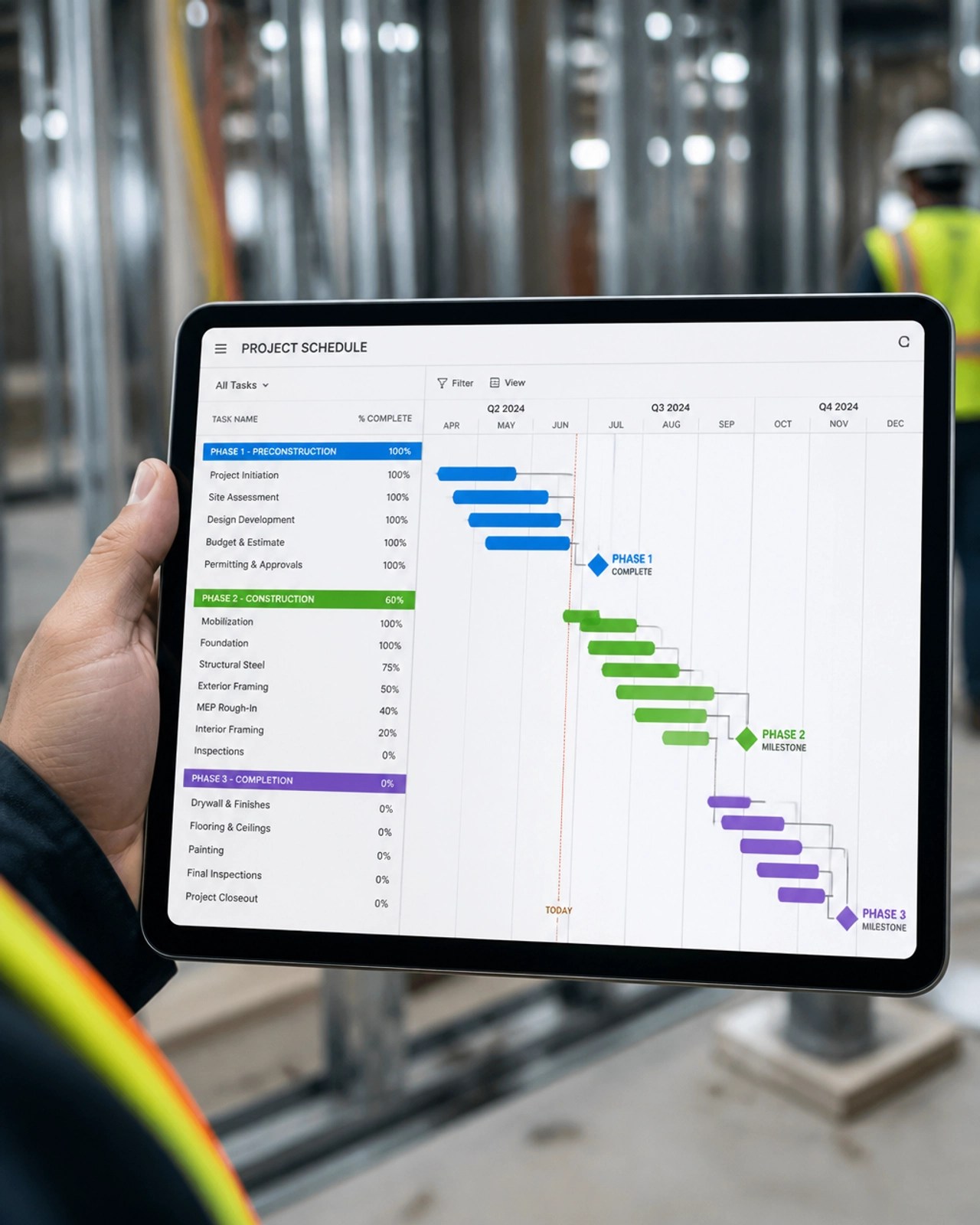
Think of your construction project like a puzzle. Instead of trying to put the whole thing together at once, we work in "phases." This is called a phasing plan, and it’s the best way to keep your business active during commercial buildouts.
A phasing plan breaks the project into smaller zones. For example, if we are renovating a large office, we might work on the left wing first while your team works in the right wing. Once the left side is finished and shiny, you move in, and we tackle the right side.
Why Phasing Works:
- Continuous Operation: Your customers and employees can still use the building.
- Safety: We keep the "dusty" work far away from your "clean" work.
- Predictability: You’ll know exactly when each section of your building will be ready for use.
Scheduling Around Your Peak Hours
Every business has a rhythm. A coffee shop is slammed at 8:00 AM, while an office might be quietest on the weekends. We don't just show up and start hammering whenever we want. We build our schedule around your schedule.
When we provide commercial construction services, we sit down with you to identify "blackout dates" or peak hours. If you have a huge product launch on a Tuesday, we won't be doing loud demolition that day.
We also look at off-hours work. Sometimes, the fastest way to get a project done without hurting your business is to work while you sleep. Doing the loudest, messiest tasks at night or on weekends can save you days of disruption.
Keeping the Mess in Its Place
Nothing scares away customers faster than a face full of drywall dust. To minimize downtime, we treat "containment" as a top priority. We use professional-grade barriers, like ZipWalls, to create an airtight seal between the construction zone and your business.
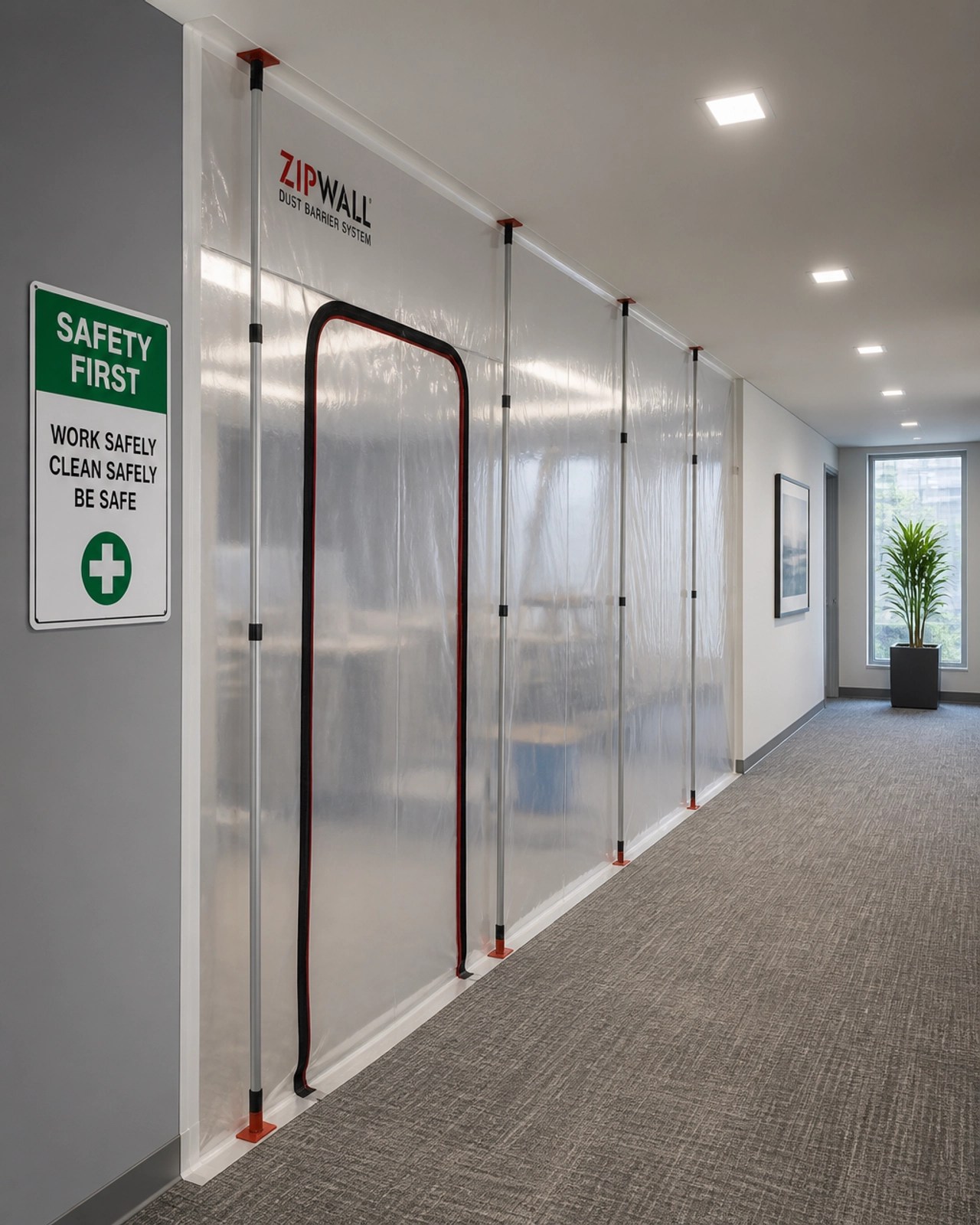
We also use "negative air" machines. These are high-powered fans that suck the air out of the construction zone and filter it, so no dust or odors leak into your workspace. It keeps your air clean and your electronics safe.
Don't forget the signage! We help you set up clear, friendly signs so your customers know you're still open and where they need to go. A little "Pardon our dust, we’re growing for you!" sign goes a long way in keeping people happy.
Retail Construction: A Different Ballgame
In retail space construction, your "front-of-house" is your lifeblood. We often use a "front-to-back" strategy here. We might renovate your storage and office areas first, then move to the sales floor in quick, overnight bursts.
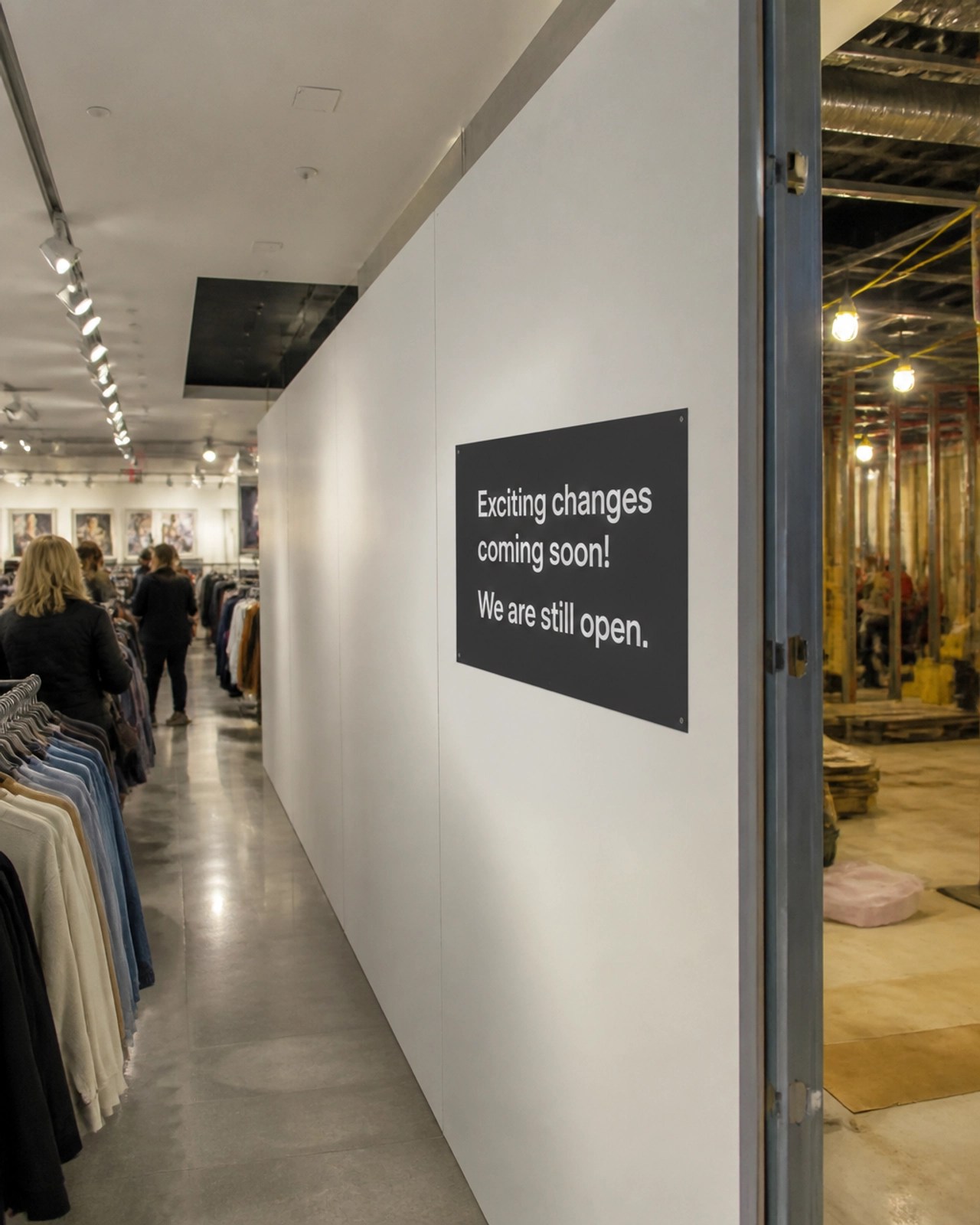
The goal is always the same: keep the registers ringing. We focus on "micro-phasing," which means moving small sections of inventory around so you never have to close the entire store.
Communication: The "Look-Ahead" Schedule
The biggest cause of stress during a buildout isn't the noise: it's the surprise. That’s why we provide "look-ahead" schedules.
Every week, we’ll give you a simple update that says:
- What we did last week.
- What we are doing this week.
- What is happening next week that might affect you (like a temporary water shut-off or a loud delivery).
When you know what's coming, you can plan your staff meetings or customer appointments accordingly. It makes the whole process feel much more manageable.
Why Experience Matters
Managing a timeline while a business is active is a skill. It requires a contractor who knows how to coordinate subcontractors, navigate city permits, and handle "surprises" without blowing the schedule.
At Farris General Contracting, we pride ourselves on being your partner. We don't just build walls; we help you build your business. If you’re ready to start your next commercial project without the headache of massive downtime, we’d love to help.
Don’t forget to check out the final part of our series! In Part 5, we’ll talk about the "Post-Construction" phase: how to handle the move-in, final inspections, and making sure everything is perfect for your grand re-opening.
Ready to talk about your project? Contact us here at Farris General Contracting and let’s get a plan in place!